How to Analyze Live Scores for Better Betting Decisions
Live scores are the heartbeat of in-play betting. But most bettors glance at the scoreline, see 0–1, and react immediately — often straight into a bad decision. The bettors who consistently find value during live matches treat real-time data as a story unfolding, not a static fact to bet against.
This guide walks through a practical, repeatable approach to reading live match data across football, basketball, and tennis — so you can move from reactive guessing to informed, disciplined in-play wagering.
Why Live Scores Are More Than Just Numbers
A live scoreline tells you the outcome of events that have already happened — it doesn't tell you what's actually happening on the pitch right now. That distinction is where analytical edge lives.
Think of a football match where the home side trails 0–1 after 30 minutes but has registered seven shots on target to the away team's one. The score says they're losing. The data says they're dominating. These two pictures tell completely different stories, and a bettor who only reads the scoreline will price the home side as a loser when the underlying match dynamics suggest anything but.
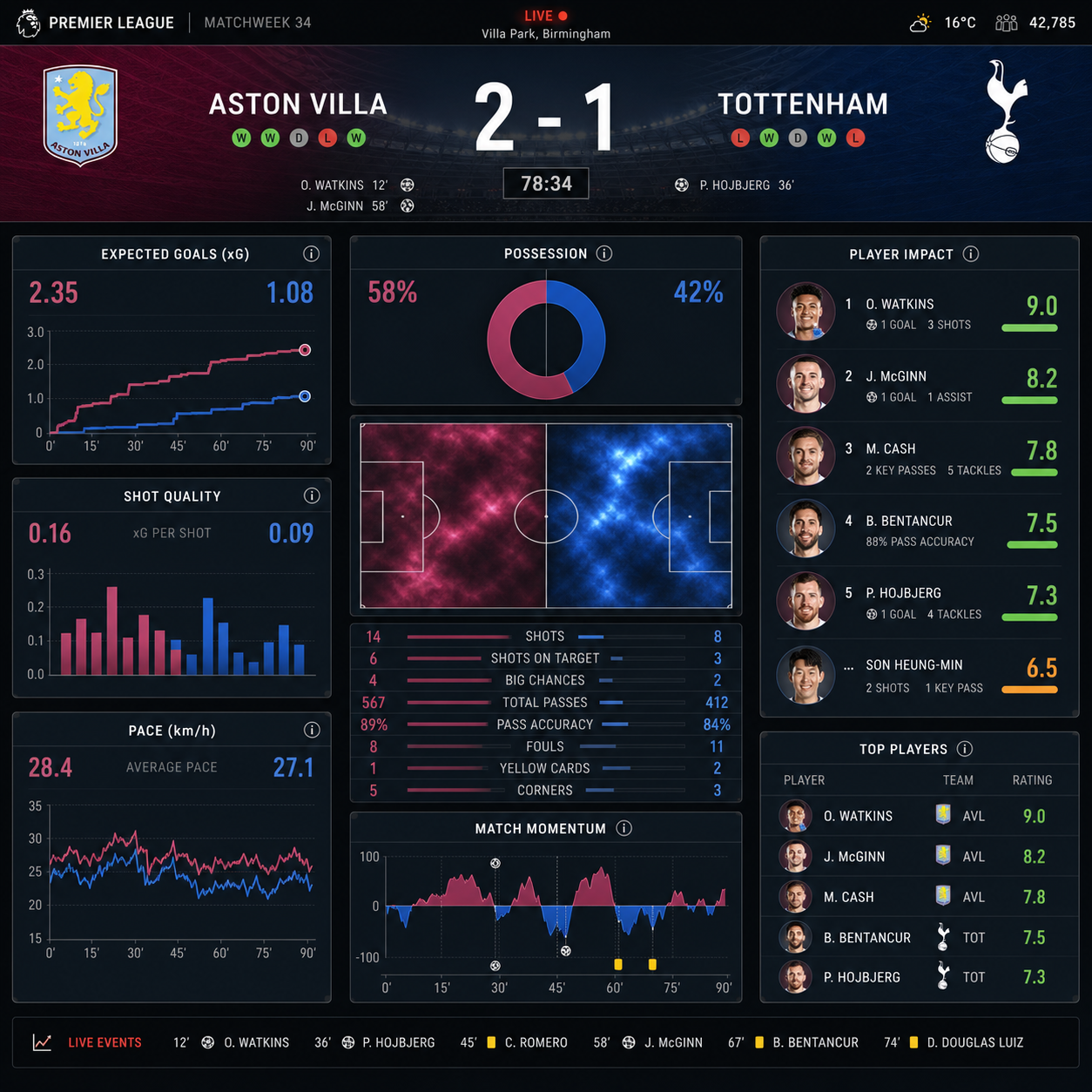
Real-time match data — possession percentages, attack counts, dangerous zones entered — gives you a window into match momentum that the score alone obscures. Developing the habit of reading this layer of information is the single biggest shift you can make in how you approach live betting.
Key Metrics to Track Beyond the Scoreline
The most useful in-game statistics for live betting are shots on target, possession percentage, corners, and disciplinary cards. Each one signals something specific about how a match is developing.
- Shots on target: The clearest proxy for genuine attacking threat. A team with 8 shots on target in 45 minutes is creating real danger regardless of what the score shows.
- Possession percentage: Tells you which team is controlling the tempo. High possession combined with low shot conversion often means a goal is building — or that the team is struggling to break down a defensive block.
- Corners: A strong secondary indicator of attacking pressure, particularly in football. Teams winning the corner count heavily are typically pushing forward and creating set-piece opportunities.
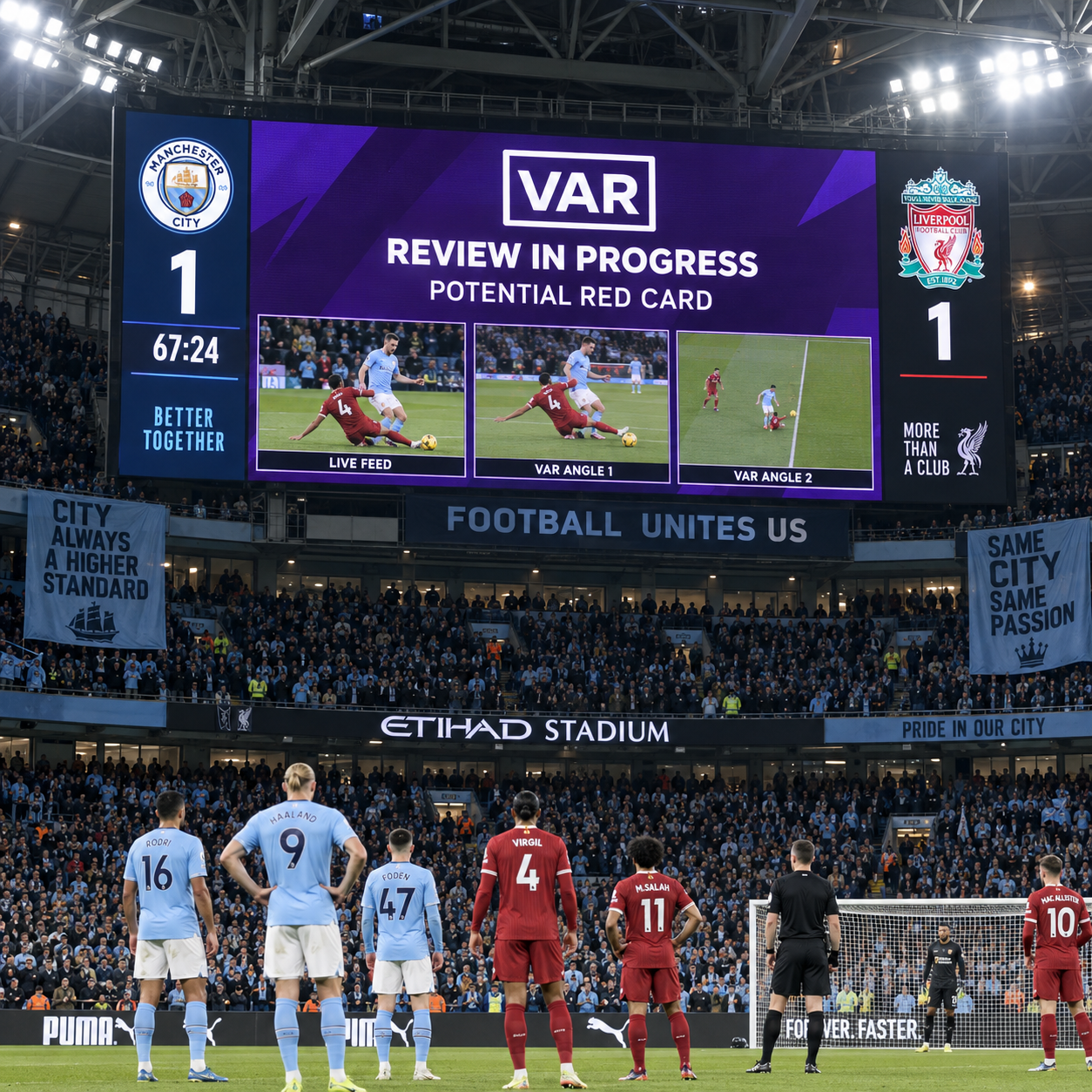
- Yellow and red cards: A red card doesn't just change a scoreline — it reshapes the entire tactical structure of a match. A team reduced to 10 men in the 55th minute while leading 1–0 faces a completely different second half than the scoreline suggests.
In basketball, track field goal percentage, turnovers, and foul trouble for key players. In tennis, first-serve percentage and break point conversion rates are the KPIs that predict the next game before it's played.
Reading Momentum Shifts in Real Time
Momentum shifts are detectable before they show up in the score — and that gap between the shift and the scoreline is where in-play betting value concentrates.
A momentum shift typically shows up as a sudden cluster of attacking events by one team: two or three corners in quick succession, a series of shots from dangerous positions, or a goalkeeper making back-to-back saves. When you see these clusters forming in the live stats feed, the probability of a goal has risen significantly even though the odds may not have fully adjusted yet.
Look for these specific patterns:
- A team gaining 10+ percentage points of possession over a 10-minute window after trailing
- Three or more corners within five minutes — especially late in a half
- A substitution that immediately changes the attacking stats (a pacey forward coming on and generating two shots in six minutes)
- An opposition player receiving a second yellow card, shifting the tactical balance completely
The key discipline here is patience. Wait for the cluster to confirm before acting. One corner or one shot isn't a momentum shift — it's noise. You're looking for a sustained pattern that shows up across multiple metrics simultaneously.
How Score Progression Affects Odds Movement
Live odds move in direct response to score changes, but the relationship isn't always proportional — and that's where careful bettors find opportunity.
When a goal is scored, bookmaker algorithms reprice immediately and aggressively. The team that just conceded will see their win odds lengthen sharply, often more than the underlying match dynamics justify. If that team was dominating possession and shots before the goal, their true probability of equalizing hasn't dropped as steeply as the odds suggest — the market is reacting to the score, not the full picture.
Odds movement also signals information. If a team's odds are drifting (getting longer) without a score change, sharp money may be moving against them based on information you don't have — an injury, a visible tactical problem, or a player clearly struggling. Treat significant unexplained odds drift as a warning sign worth investigating before placing a bet.
The practical rule: never bet purely because the odds have moved. Odds movement is a prompt to look harder at the live data, not a signal to follow blindly.
Applying Time Context to Live Score Analysis
The same scoreline means something completely different depending on when it appears. A 0–0 at minute 15 is an open match; a 0–0 at minute 75 is a tight, potentially defensive stalemate with very different implications for betting.
Time-weighted analysis means asking: given how much time remains, does this scoreline create pressure that changes how teams will play? A team trailing by one goal with 20 minutes left will push forward aggressively, opening space for counter-attacks. That behavioral shift creates specific betting opportunities — both for an equalizer and for the leading team to score on the break.
Some practical time-context benchmarks for football:
- 0–30 minutes: Scorelines are volatile and often don't reflect the true match state. Avoid heavy bets unless the stats are overwhelmingly one-sided.
- 30–60 minutes: The most reliable window. Teams have settled, patterns are established, and momentum shifts are more meaningful.
- 75+ minutes: Tactical desperation kicks in. Trailing teams push forward, injury time adds unpredictability. High-risk, high-reward territory.
In tennis, time context works differently — it's set-based rather than minute-based. A player down 0–1 in sets who just broke serve to lead 4–2 in the second set is in a very different position than the set score suggests.
Building a Simple Live Score Analysis Routine
A repeatable pre-bet routine prevents emotional, reactive decisions and keeps your analysis grounded in actual data. Here's a five-step process you can run in under two minutes before placing any live bet.
- Check the scoreline and time remaining — establish the basic context before looking at anything else.
- Review the last 10–15 minutes of stats — shots, possession, corners. Is one team building pressure or has the match flattened out?
- Identify any structural changes — red cards, substitutions, injuries. These reset match dynamics and should always be factored in.
- Check odds movement — has the price moved in a direction that's consistent with what the stats are showing, or is there a disconnect worth exploring?
- Apply time context — given the current minute, does the statistical picture translate into a realistic betting opportunity, or is there too much variance remaining?
This routine won't guarantee profitable bets — nothing does. But it creates a consistent decision-making framework that separates analysis from impulse, which is the foundation of sustainable bankroll management in live betting.
Common Mistakes When Betting on Live Scores
Most live betting losses trace back to a small set of recurring errors. Recognizing them is the first step to avoiding them.
Reacting to the Score Without Checking the Stats
Seeing a goal go in and immediately betting on the trailing team to equalize is one of the most common reactive mistakes. The score changed — but did the match dynamics? If the team that just scored is now sitting deep and defending well, the trailing side may have less chance of equalizing than the odds imply. Always check the underlying stats before acting on a score change.
Chasing Losses During a Live Match
A losing bet in the first half creates psychological pressure to recover immediately. This leads to larger, less-considered bets in the second half — often at worse value. Responsible bankroll management means treating each bet as an independent decision, not a recovery attempt. Set a per-match stake limit before the game starts and stick to it regardless of early results.
Monitoring Too Many Matches Simultaneously
Tracking five or six live matches at once sounds like more opportunity. In practice, it means shallow analysis across all of them. You miss the momentum cluster in Match 3 because you were watching a goal replay in Match 1. Start with one or two matches where you have genuine pre-match context, and expand only when your process is solid.
Ignoring Pre-Match Context
Live score analysis doesn't exist in a vacuum. A team's league position, recent form, head-to-head record, and known tactical tendencies all shape how you should interpret their live stats. A shot-heavy performance from a team that historically struggles to convert means something different than the same stats from a clinical finishing side.
Frequently Asked Questions
What is the best way to follow live scores for betting purposes?
Use a dedicated live scores platform that provides real-time statistics beyond just the scoreline — including shots, possession, and cards. Having the live stats feed open alongside the odds is the most efficient setup for in-play analysis.
How do live odds change when a goal is scored?
Bookmaker algorithms reprice almost instantly after a goal, typically lengthening the odds for the team that conceded and shortening them for the team that scored. The adjustment is often sharper than the actual change in win probability, creating brief windows of potential value for bettors who were already tracking the match data.
Can live score analysis work for sports other than football?
Yes. Basketball, tennis, and cricket all have rich real-time data streams that support in-play analysis. The specific KPIs differ — points runs and foul trouble in basketball, serve percentages in tennis — but the analytical principle is the same: look beyond the current score to the underlying performance metrics.
How many matches should I monitor at once during live betting?
For most bettors, one to two matches is the practical limit for meaningful analysis. Quality of attention matters far more than volume of markets. As your process becomes more automatic, you might extend to three, but spreading attention too thin is a reliable path to poor decisions.
Is live betting riskier than pre-match betting?
Live betting moves faster and requires quicker decisions, which increases the risk of impulsive choices. However, it also gives you more information — you can see how a match is actually developing rather than predicting from pre-match data alone. The risk level depends almost entirely on whether you apply a disciplined analytical process or bet reactively. Responsible gambling resources, such as those provided by organizations like BeGambleAware, offer useful frameworks for keeping live betting within healthy limits.